
Biohazard waste containers are easy to overlook, until something goes wrong.
In labs, hospitals, clinics, and research facilities everywhere, these containers quietly manage materials that pose real safety and compliance risks. They hold waste that should never end up in regular trash, not because it’s inconvenient, but because the consequences can be serious.
One detail matters more than most people realize: color.
Why are biohazard waste containers different colors? And do those colors actually mean something?
Yes, and understanding them plays a key role in keeping people safe and operations compliant. Let’s break it down.
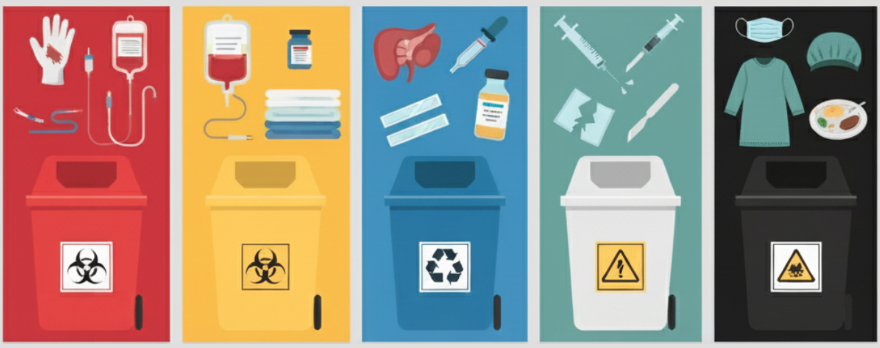
Red Biohazard Containers: Regulated Medical Waste
Red is the most recognizable color in the biohazard world, and for good reason. When you see a red container, it’s an immediate signal that special handling is required.
Red biohazard containers are typically used for regulated medical waste, meaning items that may be contaminated with blood or other potentially infectious materials. Common examples include:
- Gloves and gowns
- Gauze and bandages
- Tubing and disposable medical supplies exposed to bodily fluids
The color isn’t arbitrary. Red is a universal visual cue that alerts staff, waste handlers, and inspectors that this waste follows strict handling and disposal protocols. It helps reduce mistakes, protect people, and keep facilities compliant.
Yellow Biohazard Containers: Sharps and High-Risk Items
Yellow containers are most often associated with sharps, items that can puncture skin and create serious safety risks if handled improperly.
This typically includes:
- Needles
- Scalpels
- Blades
- Other sharp medical instruments
Yellow signals caution. These containers are designed to be puncture-resistant, leak-resistant, and secure, minimizing the risk of accidental injury. Their purpose is straightforward: keep sharp objects contained and prevent exposure during handling and disposal.
Blue Biohazard Containers: Pharmaceutical Waste
Blue containers are commonly used for pharmaceutical waste, including:
- Expired medications
- Partially used drugs
- Pharmaceutical products that should not be flushed or discarded casually
While blue may appear less urgent than red or yellow, the materials inside still require regulated disposal to protect people, water systems, and the environment. Blue containers help clearly separate pharmaceutical waste from other medical materials, reducing cross-contamination and disposal errors.
White or Translucent Containers: Sharps with Visibility
White or translucent containers are also used for sharps, particularly in environments where visibility matters.
Being able to see fill levels helps prevent overfilling, an important safety consideration when needles or blades are involved. These containers prioritize function and awareness, allowing staff to replace containers before they become a hazard.
Black Biohazard Containers: Hazardous Pharmaceutical Waste
Black containers are reserved for hazardous pharmaceutical waste or materials that require incineration. These are substances that demand the highest level of disposal control due to their chemical or environmental impact.
A black container signals that there’s no room for improvisation. Procedures must be followed exactly, every time.
Why Biohazard Waste Color Coding Matters
Color coding isn’t about aesthetics. It’s a safety system.
Clear visual differentiation:
- Reduces disposal errors
- Improves regulatory compliance
- Protects staff, patients, and waste handlers
- Creates more efficient, predictable workflows
When everyone knows what goes where, operations run more smoothly and risk drops significantly. That’s better for people, budgets, and peace of mind.
Final Thoughts: A Simple System That Protects Everyone
Biohazard waste containers aren’t flashy, but they are essential. Their colors communicate critical information quickly and clearly, without requiring a manual or a meeting.
Understanding what each color means is a small step that makes a meaningful difference in workplace safety and compliance.
If your organization is looking to improve how medical waste is handled, it starts with clarity, consistency, and the right system in place. We’re always happy to help make that easier.