
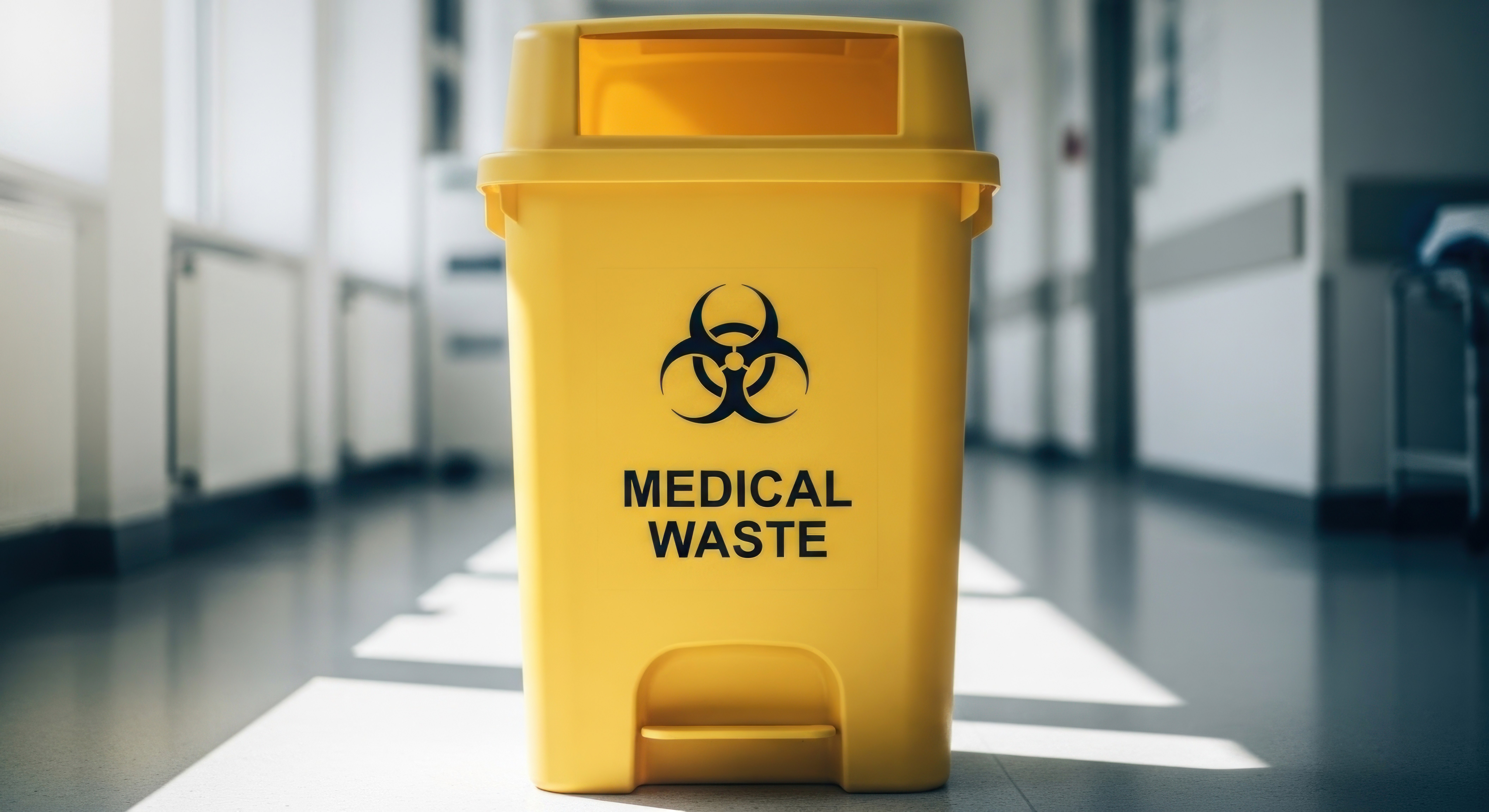
In 2026, healthcare compliance extends far beyond policies and audits. While HIPAA and OSHA remain central, one area continues to create hidden risk for healthcare organizations: PHI disposal and medical waste management.
Medical waste is no longer just a facilities or environmental concern, it’s a compliance issue. How healthcare organizations manage medical waste today has a direct impact on patient privacy, staff safety, and regulatory exposure.
Why PHI Disposal and Medical Waste Matter More Than Ever
Medical waste frequently contains protected health information (PHI). Patient labels, paperwork, specimens, and materials generated during care often move through shared spaces before final disposal.
Along the way, medical waste passes through multiple stages:
- Point-of-care generation
- Internal transport
- On-site storage
- Third-party handling and disposal
Each stage introduces risk. In 2026, PHI protection doesn’t stop at the exam room, it extends through the entire medical waste lifecycle.
When healthcare organizations manage PHI disposal separately from medical waste workflows, gaps form. When these processes are aligned, compliance becomes easier to demonstrate and risk becomes easier to manage.
Key Compliance Risks Healthcare Organizations Face in 2026
1. Chain of custody and PHI exposure
Many healthcare organizations still lack clear visibility into who is responsible for medical waste at each step. Without a documented chain of custody, it becomes difficult to demonstrate HIPAA compliance or respond to audits and investigations.
Gaps in medical waste handling increase the risk of PHI exposure and staff safety incidents.
2. HIPAA, OSHA, and regulatory penalties
Improper disposal of medical waste containing PHI creates direct HIPAA compliance risk. Unsafe handling practices can lead to OSHA violations, while state and environmental regulations add additional layers of enforcement.
In 2026, regulators expect:
- Clear accountability
- Consistent processes
- Accurate documentation
Manual logs, paper tracking, and informal workflows are increasingly seen as compliance weaknesses.
3. Workflow inefficiencies and staff burden
When medical waste disposal processes are unclear, the impact is felt on the clinical floor. Nurses, technicians, and support staff are left to make decisions without clear guidance.
These interruptions reduce efficiency, increase variability, and pull attention away from patient care. Over time, inconsistent medical waste workflows contribute to burnout and operational strain.
The Root Cause: Medical Waste Management in Silos
The most common issue isn’t a lack of effort, it’s a lack of alignment.
Facilities teams manage waste vendors. Clinical teams generate waste. Compliance teams focus on audits and policies. IT teams support documentation and reporting.
When these groups operate independently, medical waste management becomes fragmented. Ownership is unclear. Data is incomplete. Compliance visibility is limited.
In 2026, this siloed approach creates unnecessary risk.
Best Practices for PHI Disposal and Medical Waste Management
Healthcare organizations that reduce compliance risk take a unified approach to medical waste.
Effective strategies include:
- Treating medical waste disposal as a compliance workflow, not just a facilities task
- Standardizing processes across departments
- Improving visibility into waste handling and chain of custody
- Reducing reliance on manual documentation
- Aligning clinical, facilities, compliance, and operations teams
When PHI disposal is embedded into daily workflows, organizations improve both compliance and operational consistency.
The Bottom Line
In 2026, PHI disposal and medical waste management are critical components of healthcare compliance.
Organizations that address these processes intentionally are better positioned to:
- Protect patient data
- Support staff safety
- Reduce regulatory risk
- Demonstrate audit readiness
For many healthcare leaders, the greatest compliance risk isn’t a lack of policy, it’s a lack of visibility into how medical waste is handled every day.
Applied Innovation is here to help, making compliance simpler, safer, and easier to manage every step of the way.